


Multigenerational Learning: What Employees Can Teach Each Other
Multigenerational Learning: What Employees Can Teach Each Other
Today’s workplace is more generationally diverse than ever before.
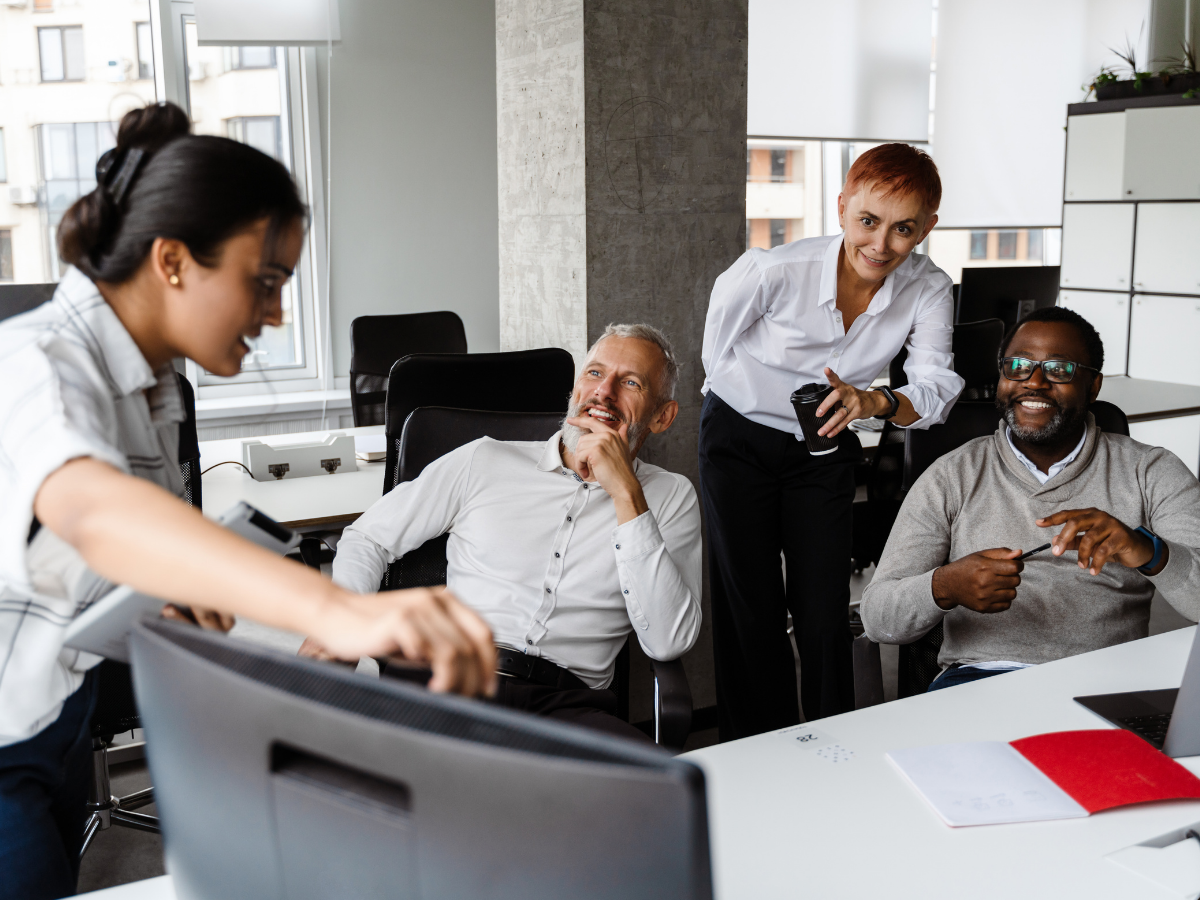
In many organizations, employees from different generations work side by side, bringing unique experiences, perspectives and ways of thinking into the same teams. While these differences are sometimes framed as challenges, they also represent one of the greatest learning opportunities modern workplaces have.
Because learning at work does not only flow from top to bottom. It flows across people, experiences and perspectives.
In 2026, organizations are beginning to recognize that multigenerational teams are not simply a demographic reality. They are a powerful source of shared growth, innovation and connection.
Why generational diversity matters
Each generation enters the workplace shaped by different experiences.
Some employees built their careers before digital collaboration became standard. Others entered work during rapid technological transformation. Some value structure and stability, while others prioritize flexibility and adaptability.
These differences influence how people communicate, solve problems and approach work.
Think of a multigenerational team like an orchestra. Different instruments bring different sounds, but together they create something richer than any single instrument could produce alone.
The strength of generational diversity lies not in everyone thinking the same way, but in what people can learn from one another.
Moving beyond stereotypes
One of the biggest barriers to multigenerational learning is assumption.
Younger employees are sometimes viewed as inexperienced. Older employees may be unfairly seen as resistant to change. These stereotypes oversimplify people and create unnecessary division.
In reality, capability and adaptability are not defined by age.
A younger employee may bring fresh thinking, digital fluency and new approaches to collaboration. A more experienced employee may bring deep institutional knowledge, emotional intelligence and strategic perspective.
Both perspectives have value.
When organizations move beyond generational labels and focus instead on shared learning, teams become stronger and more collaborative.
What younger employees often bring to the table
Younger generations entering the workforce have grown up in fast-moving, digitally connected environments. As a result, they often bring adaptability and comfort with change.
They may introduce new approaches to communication, collaboration tools, or creative problem-solving. They also tend to challenge traditional assumptions about how work should be done, which can encourage organizations to rethink outdated processes.
There is often a strong focus on flexibility, purpose and wellbeing as well. These perspectives are helping shape more human-centered workplaces.
Importantly, younger employees also bring curiosity. They are often eager to explore new ideas, ask questions and experiment with different ways of working.
This energy can help organizations stay innovative and forward-thinking.
What experienced employees contribute
Experienced employees bring a different but equally valuable set of strengths.
Years of navigating workplace challenges often build resilience, perspective and strong relationship skills. These employees may have deep knowledge of the business, industry trends and organizational history that newer employees have not yet had the opportunity to develop.
They also bring context.
Think of experience like a map built over time. While newer employees may move quickly, experienced employees often know where common obstacles appear and how to navigate them effectively.
This guidance can help teams avoid unnecessary mistakes and make more informed decisions.
Experienced employees also play an important role in mentorship. Through coaching and knowledge sharing, they help transfer insights that are difficult to capture in formal training programs.
Creating a culture of mutual learning
For multigenerational learning to thrive, organizations need to create environments where knowledge sharing feels natural and encouraged.
This starts with psychological safety. Employees should feel comfortable asking questions, sharing ideas and admitting when they do not know something.
Mutual respect is equally important. Learning becomes much more effective when employees approach each other with curiosity rather than assumption.
Organizations can support this through collaborative projects, mentoring partnerships and cross-functional teamwork. These experiences create opportunities for employees to learn directly from each other’s strengths.
The goal is not to force generations to “blend,” but to create space where different perspectives can complement one another.
Reverse mentoring and shared growth
One of the most effective ways to encourage multigenerational learning is through reverse mentoring.
Traditionally, mentoring has been viewed as knowledge flowing from senior employees to junior employees. Reverse mentoring expands this idea by recognizing that learning can happen in both directions.
For example, a younger employee may help a senior leader better understand emerging technologies or evolving workplace expectations. At the same time, the senior leader may share strategic thinking, leadership insights and industry experience.
This exchange creates mutual growth and strengthens connection across generations.
It also reinforces an important message: everyone has something valuable to teach.
Communication across generations
Communication styles often differ across generations, which can sometimes create misunderstanding.
Some employees may prefer quick digital communication, while others value more direct or detailed conversations. Neither approach is inherently better. They simply reflect different experiences and habits.
Organizations that acknowledge these differences openly can improve collaboration significantly.
The key is flexibility and awareness. Encouraging teams to discuss communication preferences helps reduce friction and creates stronger understanding.
Think of communication like learning different languages within the same team. The goal is not for everyone to speak identically, but for everyone to understand one another more effectively.
The impact on engagement and innovation
Multigenerational learning benefits more than individual development. It also strengthens engagement and innovation across teams.
When employees feel that their perspectives are valued regardless of age, they are more likely to contribute ideas and participate actively.
Diverse perspectives also improve problem-solving. Teams that combine fresh thinking with experience often arrive at more balanced and creative solutions.
This collaboration creates a workplace culture that feels dynamic rather than divided.
Looking ahead
As workplaces continue to evolve, generational diversity will remain a defining feature of the employee experience.
Organizations that embrace multigenerational learning will be better positioned to adapt, innovate and strengthen connection across teams.
Because the future of work is not about one generation teaching another.
It is about creating workplaces where everyone continues learning together.

Improve Employee Retention


Power your people. Every day.
Our A.I. enabled solution allows the creation of interactive workflows, automates compliance requirements, and measurably improves engagement. Qualee is a diversity-led organization and our platform is offered in twenty of the world’s most widely used languages.


