


Women Building High-Trust Workplaces: What Female Leaders Are Doing Differently
Women Building High-Trust Workplaces: What Female Leaders Are Doing Differently
When organizations talk about workplace culture, the conversation often revolves around values, benefits, or engagement initiatives.
But anyone who has worked inside a team knows the truth: culture isn’t defined by posters on the wall or perks in the break room. It shows up in everyday moments — how leaders listen, how decisions are explained, and whether people feel safe enough to say what’s really going on.
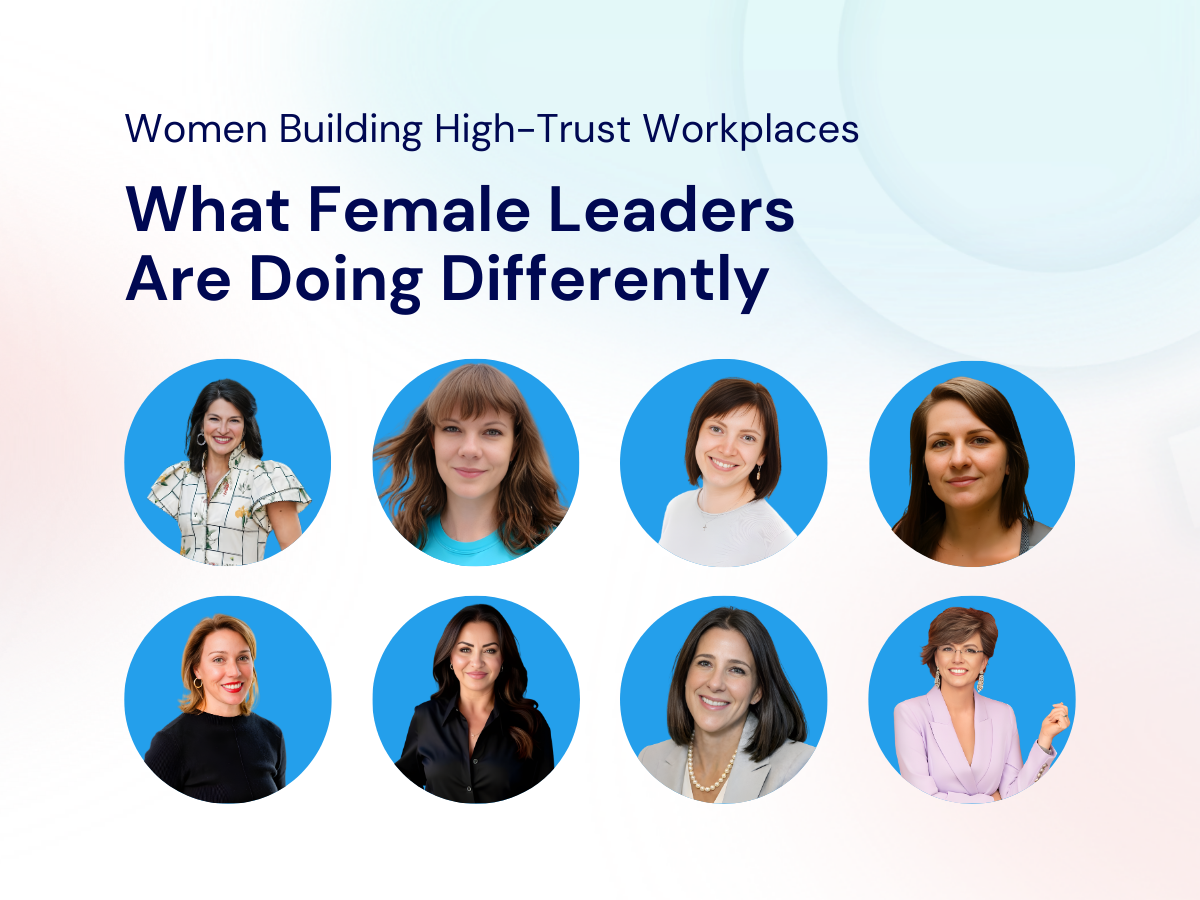
For this International Women’s Day, we asked several female leaders a simple question: what does building a high-trust workplace actually look like in real life?
Together, their responses paint a clearer picture of what it really takes to build trust at work today. Here are a few perspectives from leaders shaping that change.
Culture Works Best When People Are Treated Like People
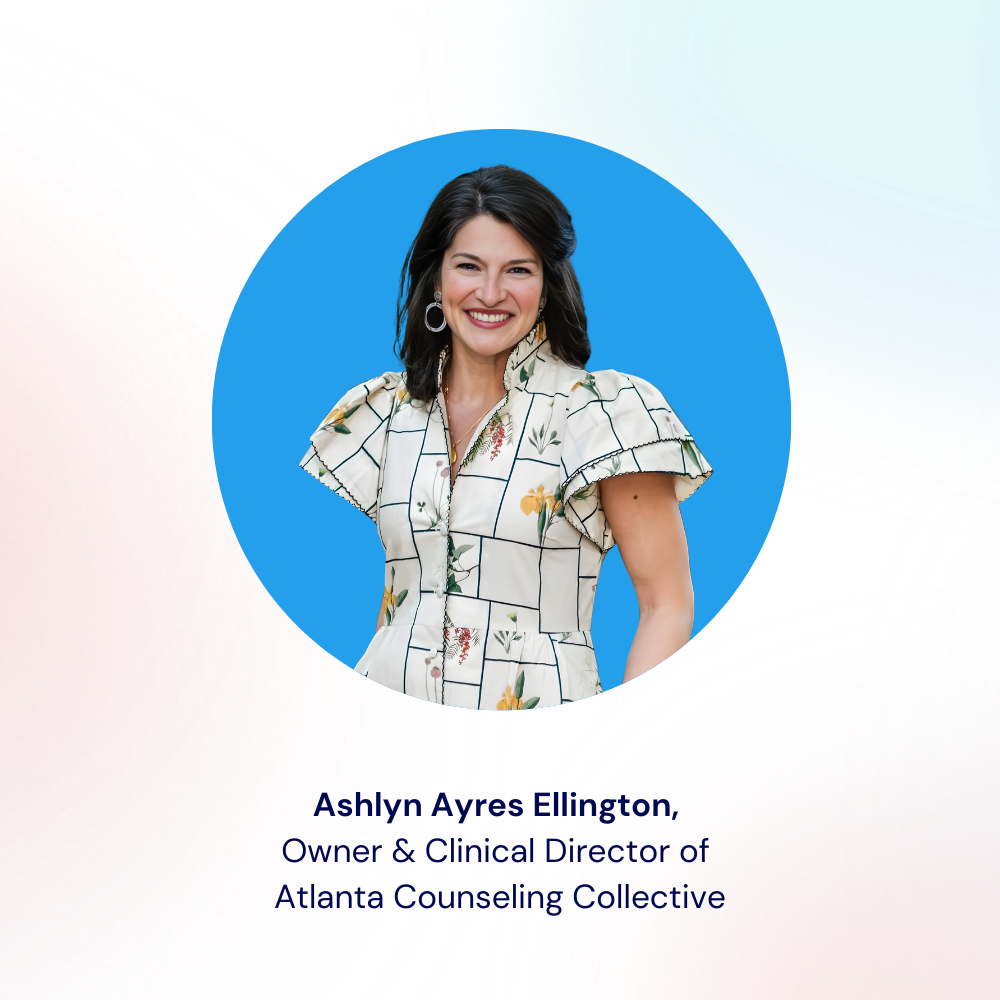
For Ashlyn Ayres Ellington, Owner and Clinical Director of Atlanta Counseling Collective, building a people-first culture starts with a simple idea: people are more than their job descriptions.
In her organization, the way the team is supported directly affects the care clients receive. That makes culture more than an internal priority — it becomes part of the organization’s impact.
Ashlyn believes the strongest workplaces balance empathy and accountability. People need clear expectations and high standards, but they also need leaders who recognize that employees are parents, caregivers, and community members with full lives beyond work.
Trust grows when leaders address issues openly, give consistent feedback, and treat people as partners in the mission rather than just units of productivity. For her, culture isn’t about making work easier — it’s about making it more meaningful.
Ashlyn sees International Women’s Day as both a moment of gratitude and reflection. As a founder and a mother, she often thinks about the kind of leadership example she wants her children to see — one where women can lead with both strength and warmth, build successful organizations, and still prioritize family and community.
Her message to future women leaders is: “don’t shrink your ambition to make others comfortable.” Lead in a way that allows other women to expand, not contract, in your presence.
When Culture Sounds Good but the System Says Otherwise
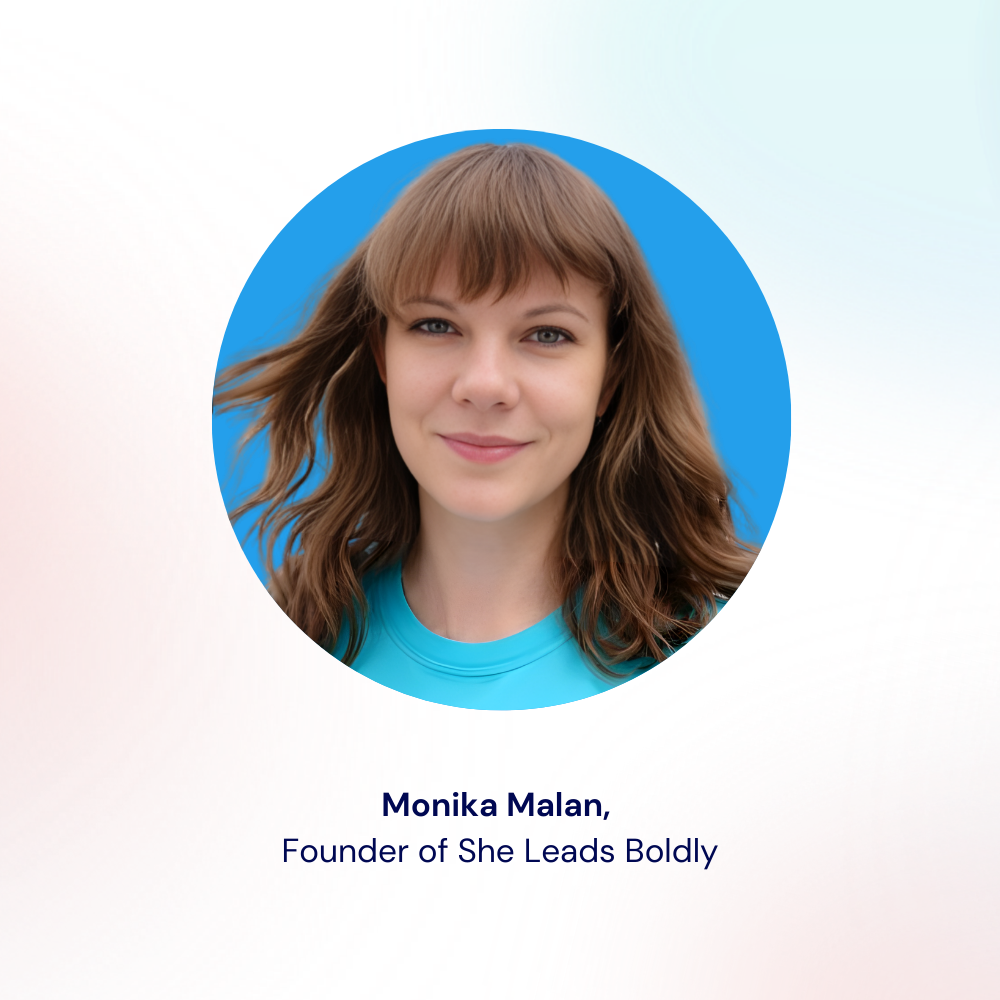
Many companies talk about inclusion, recognition, and strong culture. But if the systems behind the scenes don’t support those ideas, employees notice quickly. For Monika Malan, founder of She Leads Boldly, building a people-first culture means creating environments where talent doesn’t have to compete with the loudest voice in the room.
She believes many organizations unintentionally reward visibility over real impact. Promotions often go to those who speak up most or have the closest relationships with leadership, while consistent contributors quietly delivering results can be overlooked.
Over time, employees notice the gap between what companies say they value and what actually gets rewarded.
For Monika, the solution lies in greater transparency and structure. Clear promotion criteria, documented contributions, and measurable outcomes help ensure advancement reflects genuine impact rather than personality or proximity to power.
Another signal she looks for in healthy cultures is how disagreement is handled. When employees can challenge ideas, question decisions, and recover from mistakes without fear of being sidelined, psychological safety becomes real.
For Monika, part of building a healthier workplace culture also means helping the next generation of women lead without feeling pressured to change who they are.
Women don’t need to shrink, overcompensate, or constantly prove their worth to earn influence. The real goal, she says, is to build systems where competence and impact speak clearly for themselves.
The Moment You Know Trust Is Real
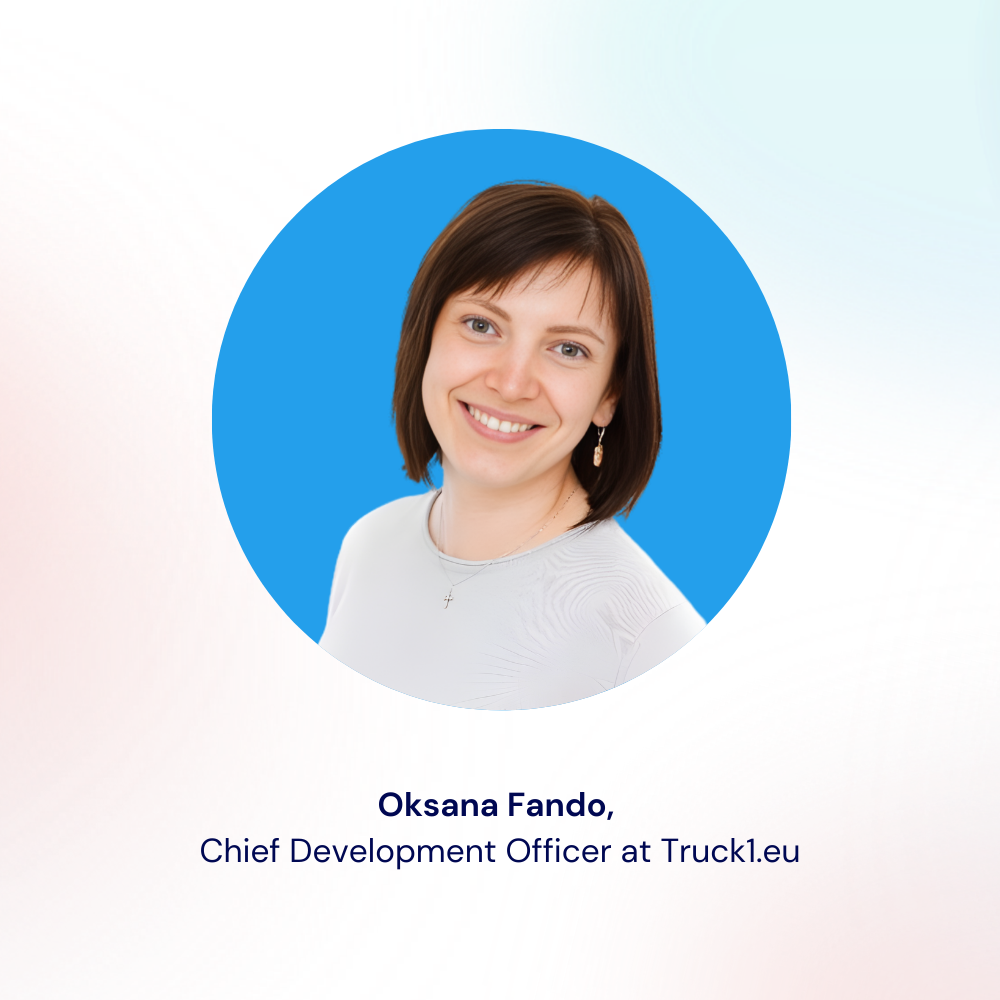
One of the clearest signs of a healthy workplace culture, according to Oksana Fando, Chief Development Officer at Truck1.eu, is surprisingly simple.
It’s the moment when someone feels comfortable asking a difficult question.
In workplaces built on trust, employees challenge ideas, debate strategy, and propose alternatives without worrying about political fallout. Problems are raised early. Mistakes are acknowledged openly. Conversations are direct rather than carefully filtered.
For Oksana, transparency plays a key role in making that possible. When leaders explain the reasoning behind decisions and show how individual contributions connect to the company’s broader goals, employees feel less like spectators and more like participants.
She also believes culture can’t exist separately from the systems that guide everyday decisions. Promotions, incentives, and leadership behavior all shape whether trust grows or fades.
When those systems align with the values an organization claims to stand for, employees gain a clearer sense of purpose, ownership, and influence and engagement becomes far more natural.
Oksana also sees International Women’s Day as a moment to reflect on the barriers women still face in leadership, particularly in tech and business. For her, the goal is simple: build workplaces where talent outweighs stereotypes and leadership opportunities are truly open.
Her advice to the next generation of women leaders is equally clear - “don’t conform to someone else’s idea of leadership.” Different perspectives and leadership styles are exactly what help organizations evolve.
The Small, Everyday Decisions That Build Trust
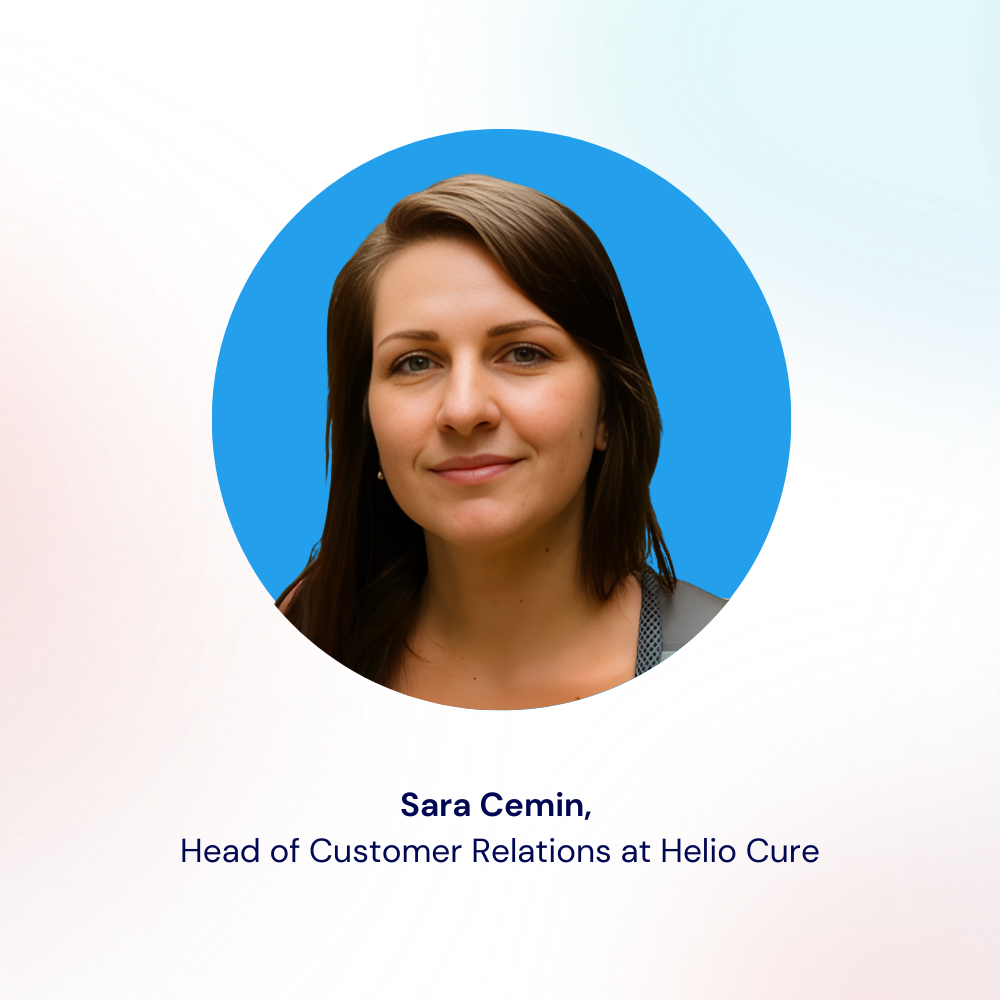
For Sara Cemin, Head of Customer Relations at Helio Cure, people-first culture isn’t defined by values on a wall — it’s built through everyday leadership behavior.
After nearly nine years in customer success, she’s noticed a pattern: the strongest teams are led by people who listen before they tell. Leaders who create space for honest conversations tend to hear about problems early — long before they turn into crises.
One of the signals she trusts most is how quickly difficult news reaches leadership.
“When people feel safe, problems come to the surface early,” she explains. “Not because someone told them to be transparent but because they trust there won’t be consequences.”
While employee surveys provide important insight, Sara believes leaders should also pay attention to everyday signals — whether people feel comfortable speaking up, whether they recommend the workplace to others, and the overall energy teams bring into their work. For her, trust is built through small, consistent actions: leaders listening fully, following through on commitments, and being comfortable saying, “I don’t know, let me find out.”
Sara also believes women entering leadership shouldn’t wait for the perfect moment.
Too often, she says, women hold themselves back until the timing, conditions, or confidence feel “just right.” But the leaders who create real change are often the ones willing to step forward and bring their full perspective into spaces that weren’t originally designed for them.
Culture Begins With Meaningful Communication

For Alexa Chilcutt, Lead Faculty at Johns Hopkins Executive Education, workplace culture begins with something simple but powerful: communication.
Leaders shape culture by helping people understand the meaning behind their work and the value of the people doing it. When organizations invest in their people — recognizing their talents, contributions, and potential — teams are far more likely to invest in one another and in innovation.
According to Alexa, one of the clearest signs of a healthy workplace culture is when employees genuinely believe in the organization they represent. When people trust leadership and feel valued, that confidence becomes visible in how they show up — both internally and with customers.
She also believes International Women’s Day is an opportunity to celebrate the unique strengths women bring to leadership, from creativity and resilience to the ability to balance complex responsibilities with empathy and care.
She also sees International Women’s Day as a chance to recognize the many strengths women bring to leadership — creativity, resilience, generosity and the ability to balance complex roles both at work and in life.
For Alexa, leadership begins with authenticity. Bringing your full self to the challenges in front of you, she believes, is what allows leaders to build real trust and connection with the people around them. After all, as she puts it, “you can’t lead a party of one.” The most meaningful leadership is the kind that brings people together and helps them grow.
Culture Is a Leadership Responsibility

For Nellie Akalp, founder of CorpNet, workplace culture isn’t something that lives in strategy documents or HR initiatives. It shows up in everyday leadership choices.
In practice, she says a strong culture is built when leaders set clear expectations, listen actively, and treat employees as whole people. When people feel respected and empowered, performance tends to follow naturally.
One mistake she often sees organizations make is treating culture like a program instead of a responsibility. Culture isn’t defined by what leaders say — it’s shaped by what they consistently model and reinforce.
She also believes many teams struggle today because employees feel overwhelmed and disconnected from the bigger picture. When leaders provide clarity, realistic workloads, and meaningful support, both performance and wellbeing improve.
For Nellie, leadership is ultimately about purpose. Knowing that decisions influence people’s growth and livelihoods is what keeps her motivated.
As International Women’s Day approaches, she encourages the next generation of women leaders to step forward with confidence — “you don’t have to wait to be chosen to lead.”
When Structure and Empathy Work Together
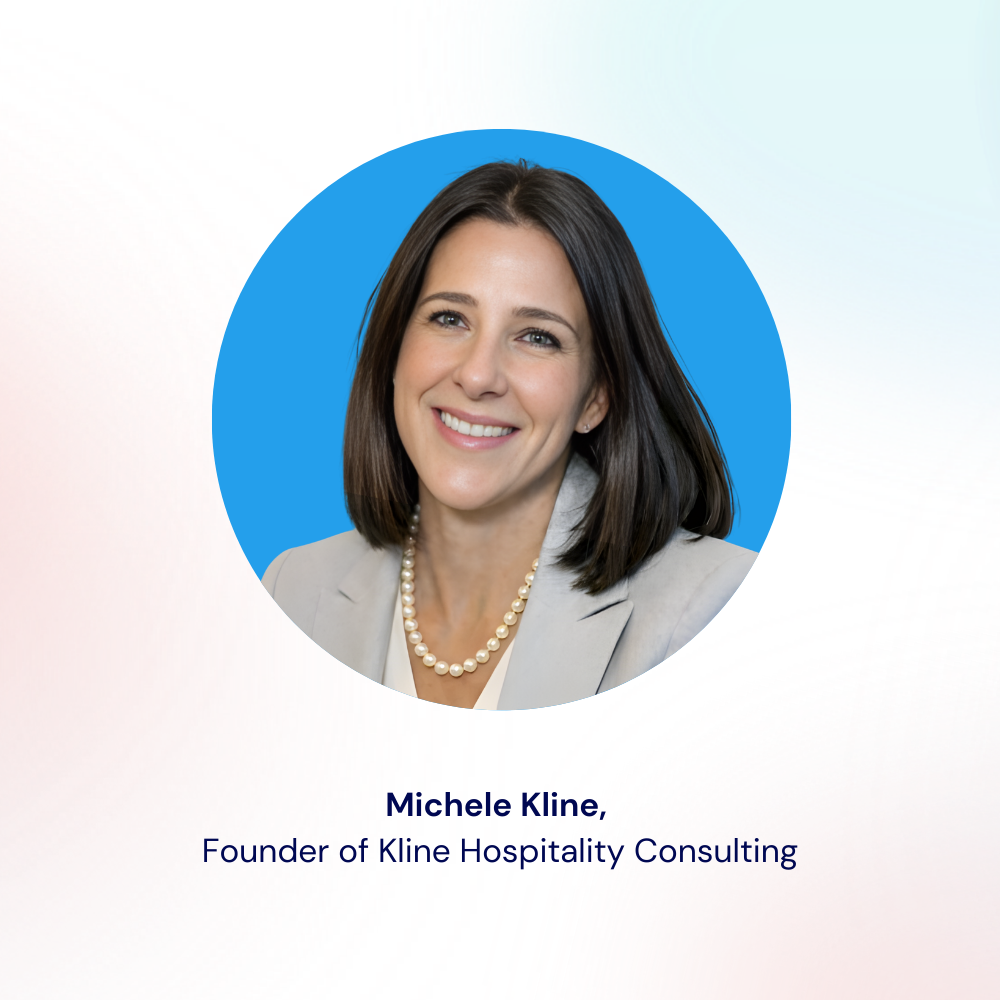
For Michele Kline, founder of Kline Hospitality Consulting, a people-first workplace begins with a simple principle: systems should serve humans, not the other way around.
In practice, she says, strong cultures are built through everyday leadership behaviors. Leaders listen before reacting, create clarity instead of confusion, and understand that culture isn’t defined by mission statements — it’s shaped by the small decisions made every day.
One mistake she often sees organizations make is treating culture like a campaign rather than a commitment. Workshops and slogans mean little if leadership behavior doesn’t reflect those values.
Healthy cultures, Michele explains, are easy to recognize in conversation. Employees feel comfortable speaking up, disagreements are handled respectfully, and feedback moves in all directions without fear.
As an immigrant and entrepreneur, she also sees International Women’s Day as a reminder of both resilience and responsibility — continuing the work of building leadership spaces that are more inclusive and representative.
Her message to women stepping into leadership is loud and clear: “don’t shrink your voice to make others comfortable.” Strong leadership, she believes, can be both competent and compassionate at the same time.
When Leaders Remember Employees Are Human First

For Angela Belford, CEO of The Belford Group, a people-first workplace culture starts with a simple recognition: employees are humans first.
People bring their experiences, emotions and challenges into the workplace and leaders who acknowledge that reality tend to build stronger and more resilient teams. In practice, she says, this means communicating clearly, regulating reactions and creating space for honest conversations — especially when conflict or mistakes happen.
One of the biggest culture mistakes she sees is when organizations talk about their values but fail to model them. Employees watch leadership behavior far more closely than statements, and silence around unhealthy behaviors can slowly erode trust.
Angela believes healthy cultures are easy to spot. People can challenge ideas, admit mistakes, and ask for help without fear of punishment.
As International Women’s Day approaches, she also reflects on the generations of women who expanded opportunities before us and the responsibility leaders have to continue that progress.
Her message to future women leaders is to “build strong relationships and invite others into the journey”, because leadership is rarely meant to be carried alone.
Building the Workplaces People Actually Want to Stay In
Although each leader shared a different perspective, a few themes appeared again and again.
High-trust workplaces don’t happen by accident. They are built through consistent leadership behavior — listening carefully, explaining decisions honestly and making sure that what organizations reward aligns with what they claim to value.
When those pieces come together, something powerful happens. People stop protecting themselves and start contributing their best ideas. Teams become more collaborative. Work feels more purposeful.
And perhaps most importantly, people choose to stay.
As these women leaders remind us, building a strong workplace culture isn’t about grand gestures. It’s about the everyday choices that make people feel respected, supported, and trusted to do meaningful work.

Improve Employee Retention


Power your people. Every day.
Our A.I. enabled solution allows the creation of interactive workflows, automates compliance requirements, and measurably improves engagement. Qualee is a diversity-led organization and our platform is offered in twenty of the world’s most widely used languages.


